


What If Rest Isn’t Doing Nothing?

Why Pausing May Be One of the Most Important Things We Can Do for Our Health
Somewhere along the way, we seem to have confused being busy with being successful.
We celebrate the full diary.
The endless to-do list.
The ability to keep going, keep achieving and keep showing up no matter what.
And yet, when we talk about rest, something inside many of us resists.
“I can’t just do nothing.”
“I have too much to do.”
“I’ll rest when everything is finished.”
But the truth is…
Everything is rarely finished.
There will always be another email.
Another task.
Another responsibility.
Another reason why slowing down can wait until tomorrow.
So perhaps the question isn’t:
“How do I find time to do nothing?”
Perhaps the question is:
“What is the urgency?”
“What is the emergency?”
Because often, in that moment, there isn’t one.
But our nervous systems may not know that.
The Constant State of Doing
Modern life often keeps us in a state of constant stimulation.
We move from one thing to the next.
We carry mental lists in our heads.
We think ahead, plan ahead, prepare ahead.
Even when our bodies stop, our minds can continue running.
The washing machine is on, but so is our brain.
We sit down, but we are still mentally solving problems.
We take a break, but we are scrolling, replying, organising or thinking about what needs to happen next.
This is why rest can feel uncomfortable.
Because true rest asks us to step out of the constant state of doing and allow ourselves to simply be.
And for many people, that feels unfamiliar.
Rest Is Not Laziness
I often hear people describe rest as “doing nothing.”
But what if we looked at it differently?
Rest is not doing nothing.
Rest is giving your nervous system the opportunity to regulate.
It is sending your body the message:
“In this moment, I am safe.”
That message is incredibly powerful.
Because when our nervous system feels safe, we can think more clearly.
We can respond rather than react.
We can connect more deeply.
We can make choices from a place of awareness rather than exhaustion.
Rest is not taking away from your life.
It is helping you return to your life with more presence.
But What About Our Thoughts?
One of the hardest parts of slowing down is not the physical act of stopping.
It is the mental noise that often appears when we do.
The thoughts.
The worries.
The things we have pushed aside because we have been too busy to feel them.
Recently, someone asked me:
“Is it okay to say how I feel out loud?”
My answer was:
Yes.
Absolutely.
Acknowledging an emotion does not create it.
Naming anxiety does not make you anxious.
Saying you feel overwhelmed does not make overwhelm stronger.
Your feelings are already there asking to be noticed.
Notice, Don’t Judge
There is sometimes a fear that if we acknowledge difficult emotions, we are giving them more power.
That by saying:
“I feel anxious.”
“I feel sad.”
“I feel angry.”
we are somehow inviting more negativity into our lives.
But emotions are not created by being acknowledged.
They are created through being human.
When we suppress or ignore what we feel, we often add more pressure to an already full system.
It is like placing a lid on a boiling pot.
The pressure continues building.
Mindfulness offers another way.
To notice.
To acknowledge.
To create space.
“I notice anxiety is here.”
“I notice tension in my shoulders.”
“I notice sadness sitting in my chest.”
Not to become the feeling.
Not to judge it.
Simply to recognise:
“This is what is here right now.”
And when we allow ourselves to meet emotions with compassion, they often become less overwhelming.
Small Moments of Safety Matter
Rest does not always need to mean a whole day off.
For many of us, that feels unrealistic.
Instead, we can begin with small moments.
Three slow breaths before opening your laptop.
Standing outside and feeling the sun on your face.
Walking without rushing.
Drinking your tea without multitasking.
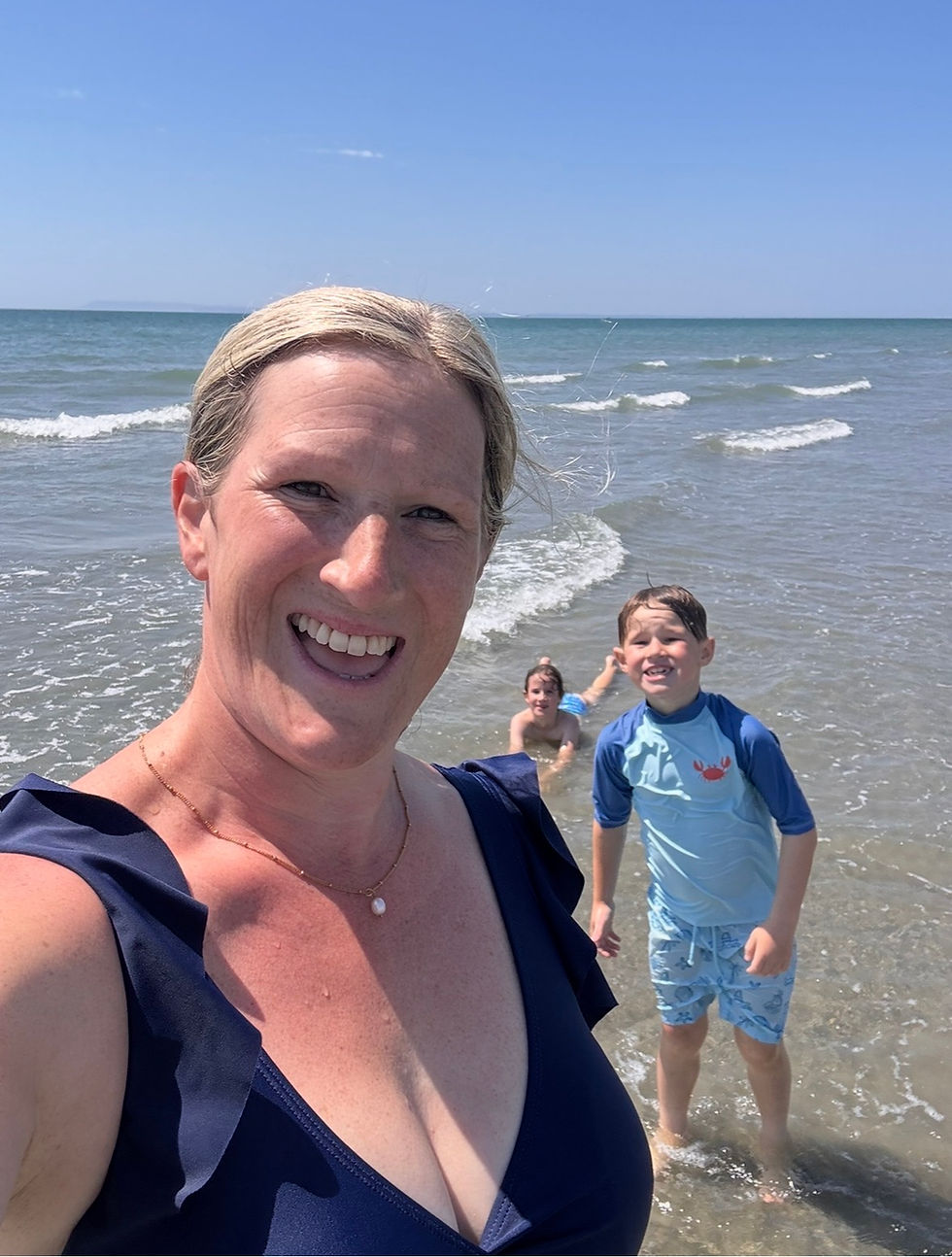
Listening to the sound of the sea.
Feeling your feet on the ground.
These moments may seem small, but they are opportunities to remind your nervous system:
“You do not have to be in survival mode right now.”
A Different Definition of Productivity
Perhaps we need to redefine productivity.
Because constantly pushing ourselves until we have nothing left is not sustainable.
Rest allows us to replenish.
Pausing allows us to reconnect.
Awareness allows us to respond differently.
These are not signs of weakness.
They are signs of wisdom.
After many years working in healthcare, I have seen how important prevention is.
Supporting our health is not only about what we do when something goes wrong.
It is also about the small things we do every day to care for ourselves.
The moments we breathe.
The moments we connect.
The moments we listen.
So the next time you find yourself thinking:
“I don’t have time to rest.”
Perhaps pause and ask:
“What is the urgency?”
“What is the emergency?”
And maybe, just for a moment, allow yourself to experience the possibility that rest is not something you earn once everything is complete.
Rest is part of how you care for yourself along the way.
Because rest is not doing nothing.
Rest is coming home to yourself.
A little invitation to rest
If you've been reading this and thinking, “I know I need more rest, but I don't really know how to stop,” I've created something simple for you.
The Rest Ritual is a gentle practice to help you pause, step out of doing mode and reconnect with what you actually need.
It's not another routine to add to your list.
It's a few quiet moments to stop, soften, breathe, notice and rest.
You can use it at the end of a busy day, when you're feeling overwhelmed, before bed, or simply when you realise you've been holding too much.
Access your free Rest Ritual
Give yourself permission to pause.
DOWNLOAD THE REST RITUAL → www.seasoulmindfulness.com
You don't need to wait until everything is done.
You are allowed to rest now.



Comments